

English
- English
- Español
- عربي
- français
- Deutsch

How to Check Plywood Quality Before Buying
Time: 2026-07-14 13:34:36
Author: Linyi Camel Plywood Co., Ltd
Click:
Purchasing plywood is more than simply comparing prices. Whether you are sourcin
Purchasing plywood is more than simply comparing prices. Whether you are sourcing film faced plywood, hardwood plywood, or construction plywood, product quality directly affects project safety, construction efficiency, and long-term costs.
Low-quality plywood may suffer from delamination, warping, inconsistent thickness, or poor load-bearing performance, leading to costly replacements and project delays.
For contractors, importers, and distributors, understanding plywood quality inspection is essential before placing a bulk order.
This guide explains the key factors to inspect before buying plywood and how to identify a reliable plywood supplier.
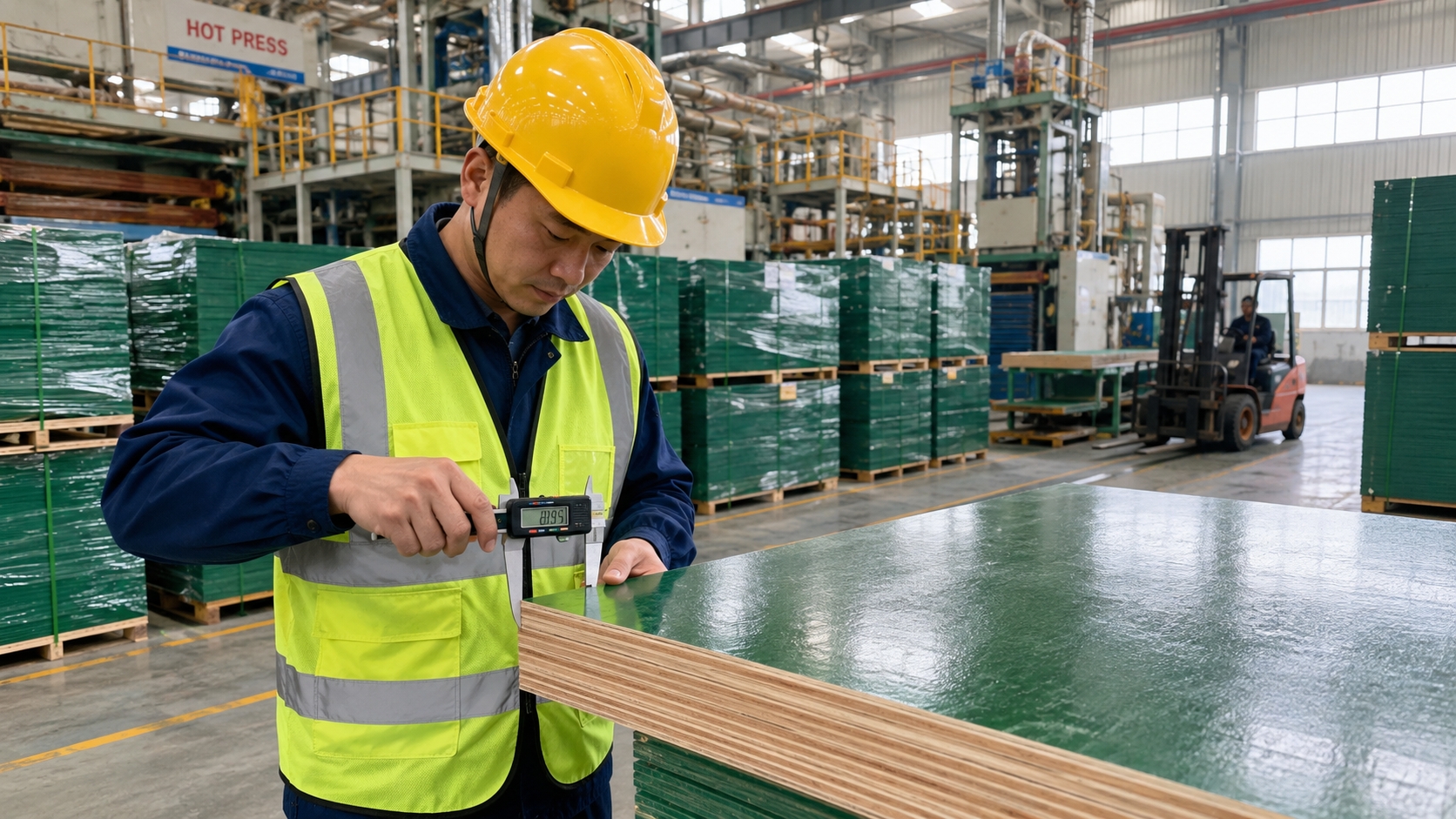
Why Plywood Quality Inspection Matters
Quality plywood offers several important benefits:
- Higher structural strength
- Better moisture resistance
- Longer service life
- Smoother concrete finishes
- Reduced material waste
- Lower maintenance costs
A thorough quality inspection helps ensure you receive plywood that meets your project requirements and international standards.
1. Check the Plywood Core
The core is the foundation of every plywood panel.
High-quality plywood should have:
- Uniform veneer layers
- Tight bonding between veneers
- Minimal internal voids
- Consistent density
Common core materials include:
- Hardwood Core
- Eucalyptus Core
- Poplar Core
- Birch Core
For construction plywood and film faced plywood, hardwood or eucalyptus cores generally provide better strength and durability.
2. Inspect the Surface Quality
The surface should be smooth, clean, and free from visible defects.
Look for:
- No cracks
- No bubbles
- No scratches
- No resin leakage
- No damaged edges
- Uniform film coating
For film faced plywood, the phenolic or PP film should be firmly bonded without peeling or wrinkles.
A high-quality surface also contributes to better concrete finishing.
3. Measure Thickness Accuracy
Thickness consistency is critical for construction applications.
Use a caliper to measure multiple locations across the panel.
The thickness should remain uniform with only minimal manufacturing tolerance.
Consistent thickness ensures:
- Better structural stability
- Easier installation
- Accurate formwork assembly
- Improved concrete quality
4. Check Panel Flatness
Lay the plywood on a flat surface.
High-quality plywood should remain flat without:
- Warping
- Twisting
- Bending
- Uneven corners
Poor flatness can create alignment problems during construction and reduce the quality of concrete surfaces.
5. Examine Edge Quality
The edges reveal much about manufacturing quality.
Good plywood should have:
- Clean trimming
- Smooth edges
- Proper waterproof edge sealing
- No visible gaps between veneers
Well-sealed edges help prevent moisture penetration and extend the service life of the panel.
6. Verify Glue Performance
The adhesive plays a major role in plywood durability.
For construction projects, WBP (Water Boiled Proof) glue is recommended because it provides:
- Excellent waterproof performance
- Strong veneer bonding
- Better resistance to delamination
- Reliable outdoor performance
For interior furniture applications, MR glue plywood may be sufficient.
Always confirm the glue type before placing an order.
7. Evaluate Bonding Strength
Poor bonding is one of the most common quality issues.
Signs of strong bonding include:
- No visible separation between veneer layers
- Solid panel structure
- No hollow sound when tapped
- Clean edge profile
Reliable bonding ensures the plywood performs well under heavy loads and repeated use.
8. Check Moisture Content
Excessive moisture can cause:
- Warping
- Cracking
- Mold growth
- Reduced strength
Professional manufacturers use moisture meters to control moisture content before packaging.
Proper moisture levels improve dimensional stability during transportation and installation.
9. Review Certifications
International certifications demonstrate manufacturing quality and compliance.
Common certifications include:
- FSC
- CE
- CARB
- ISO 9001
While certifications do not guarantee perfect quality, they indicate that the manufacturer follows recognized production and quality management standards.
10. Ask for Factory Quality Inspection Reports
Professional plywood manufacturers usually perform multiple inspections during production.
Typical inspections include:
- Raw material inspection
- Veneer grading
- Thickness measurement
- Glue bond testing
- Moisture testing
- Surface inspection
- Final packaging inspection
Requesting inspection reports or production photos can provide additional confidence before shipment.
Common Defects to Avoid
Before purchasing plywood, inspect for these common defects:
- Delamination
- Large internal voids
- Uneven thickness
- Poor edge sealing
- Surface bubbles
- Warped panels
- Broken corners
- Loose film coating
- Excessive repairs
Avoiding these defects helps reduce project risks and replacement costs.
Tips for Choosing a Reliable Plywood Supplier
Quality inspection starts with selecting the right manufacturer.
Look for suppliers that offer:
- Experienced production teams
- Modern manufacturing equipment
- Strict quality control
- Stable raw material sourcing
- Export experience
- OEM customization
- Professional technical support
A reliable supplier should also be willing to provide product specifications, certificates, and inspection records.
Why Choose CAMELPLY?
CAMELPLY has over 25 years of experience manufacturing high-quality plywood for global construction and industrial markets.
Our products include:
- Film Faced Plywood
- Hardwood Plywood
- Structural Plywood
- Marine Plywood
- MDF Boards
- H20 Timber Beams
Every panel undergoes strict quality inspection, including:
- Veneer selection
- Glue bond testing
- Thickness measurement
- Moisture control
- Surface inspection
- Final packaging inspection
We provide:
- Factory-direct pricing
- OEM & private label services
- Stable production capacity
- Worldwide shipping
- Professional export support
Our products are trusted by contractors, distributors, and importers in more than 100 countries.
Conclusion
A proper plywood quality inspection helps buyers avoid costly mistakes and ensures better construction performance.
By checking the core material, surface quality, thickness, glue type, edge sealing, bonding strength, and supplier qualifications, you can confidently choose plywood that meets your project requirements.
Partnering with an experienced manufacturer like CAMELPLY ensures consistent quality, reliable supply, and long-term value for every construction project.
Frequently Asked Questions
How can I identify high-quality plywood?
Inspect the core, surface, thickness, edge sealing, glue type, and overall bonding quality. Reliable manufacturers should also provide quality certificates and inspection reports.
Which glue is best for construction plywood?
WBP glue is the preferred choice for construction because it offers excellent waterproof performance and strong bonding.
Why is edge sealing important?
Proper edge sealing prevents moisture from entering the plywood, reducing the risk of swelling, delamination, and premature damage.
Should I ask for quality inspection reports before ordering?
Yes. Inspection reports, certifications, and production photos help verify product quality and reduce purchasing risks, especially for bulk orders.
Share Us

点击右上角
分享给朋友吧
Sign up for our newsletter to stay up-to-date with our promotions, discounts, sales, and special offers
INFORMATION
TOP-SELLING PRODUCTS
CONTACT US

No.11, Chuang ye Road of Yitang Industrial Park, Linyi City, China.

0086-178-5394-3002

info@camelply.com
Copyright © Fortune BM 2022 All Rights Reserved.